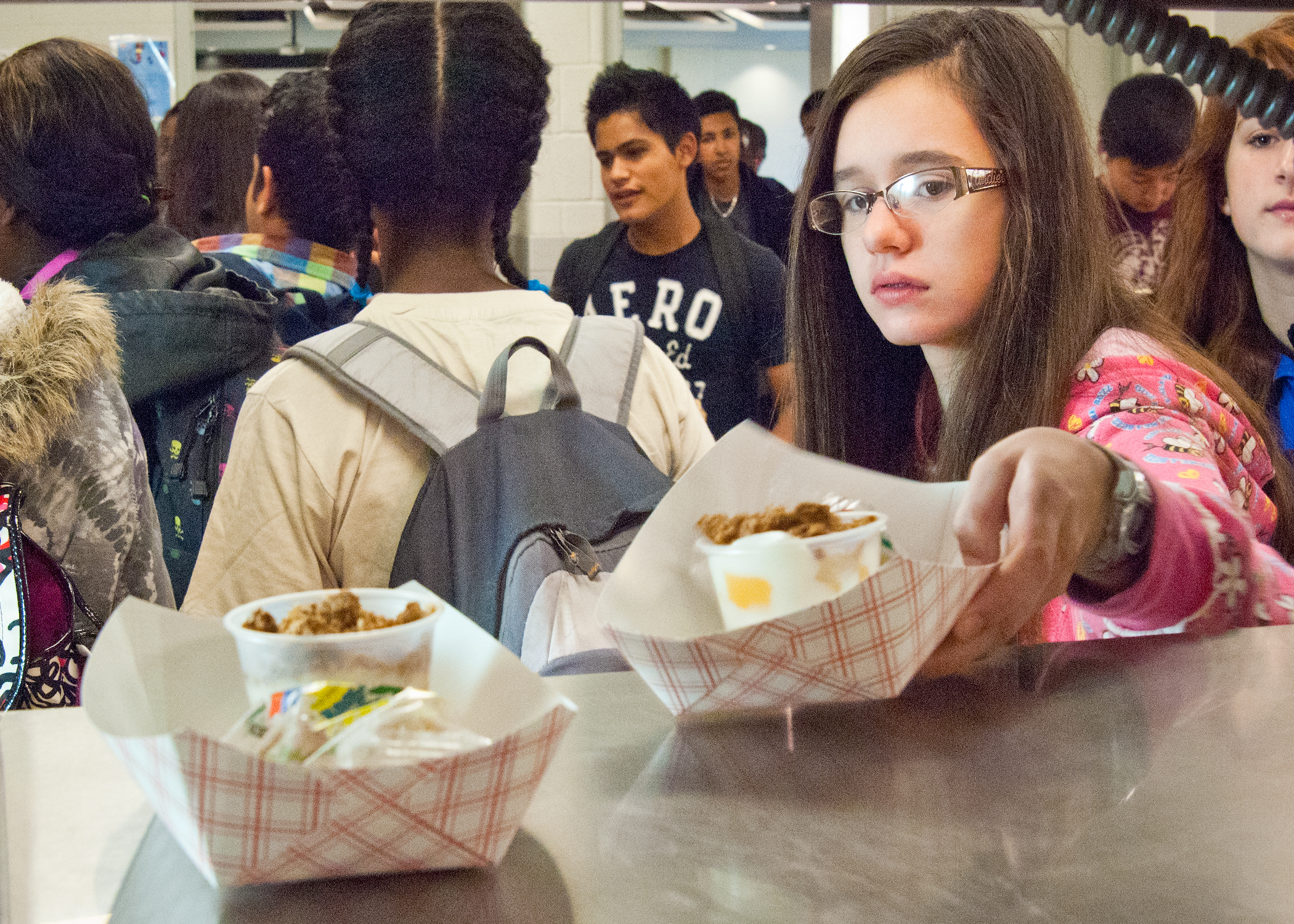
Thousands of Oklahoma schoolchildren could lose a daily meal in less than two weeks after the Oklahoma State Department of Education (OSDE) announced it will end a federally funded third-meal program on Sept. 30.
The agency disclosed the decision on Tuesday, Aug. 18, weeks into the school year. Forty-seven districts and 132 school sites, all in rural areas, are enrolled in the Expanded Learning Time option of the U.S. Department of Agriculture's (USDA) Child and Adult Care Food Program, KGOU/StateImpact Oklahoma reported.
The timing has left districts scrambling to rewrite bus schedules, shorten school days and figure out how to keep feeding students.
At Whitebead Public Schools, a pre-K through eighth-grade district in Pauls Valley, Child Nutrition Director Cathy Alley prepares 200 meals a day for the roughly 65% of students who take them. The district sits at 70% free and reduced lunch eligibility.
Principal and Superintendent Jason Midkiff told KGOU the district lengthened its school day during the 2024-25 year specifically to serve the third meal. Now Whitebead must reverse course, shortening the day and reworking bus routes to shift the meal into an after-school program.
"Almost everybody approves a calendar and approves the school day, gets that out to parents … And so, to have it done once the school year started was pretty disappointing," Midkiff said.
Why OSDE pulled the program
OSDE cited compliance failures. A USDA official's April 8 email, obtained by StateImpact Oklahoma through an open records request, recommended ending the program "based on the abuse of the option the agency is seeing."
OSDE media relations manager Brenna Long said some schools did not actually extend their day or offer enrichment activities as required. Kassi Reddell, the state director for the Child and Adult Care Food Program, said during an Aug. 20 video call with district leaders that "there was no identifiable academic or enrichment activity beyond the meal in many of those cases," Oklahoma Voice reported.
A USDA spokesperson said the federal agency did not mandate the shutdown. OSDE "exercised state authority, and USDA supported the integrity rationale," the spokesperson said.
State Superintendent Lindel Fields said schools can pivot to an after-school program to keep feeding children. OSDE requires those programs to last at least 30 minutes and include structured enrichment activities such as tutoring or athletics.
As of Sept. 8, only 13 of the 47 districts had begun applying for the after-school alternative, according to OSDE spokesperson Tara Thompson.
Rural districts say the alternative won't work
For rural schools where students ride buses up to 90 minutes, an after-school meal is not a simple swap. Haworth Public Schools Superintendent Jerrod Lundry told FOX 25 in August that the district cannot afford a second set of bus routes.
Millwood Public Schools, an OKC-area district, also participates in the program. Superintendent Cecilia Robinson-Woods told KOCO in late August that her district feeds between 100 and 200 students depending on the season, primarily through athletics. But she acknowledged the difficulty for districts building a program from scratch on short notice.
Chris Bernard, president and CEO of Hunger Free Oklahoma, said the decision will hit rural, lower-income students hardest because they depend on buses that leave at the end of the scheduled school day.
Lawmakers push back
Fifty bipartisan state legislators co-signed a letter led by Sen. David Bullard, R-Durant, the day after OSDE's announcement, condemning the decision and requesting the agency suspend the changes for the next school year. Bullard said in a statement that OSDE should follow proper process and give districts adequate notice before making such a change.
Sen. Adam Pugh, R-Edmond, chair of the Senate Education Committee, said he and other lawmakers were "blindsided." In an interview with Oklahoma Voice published Sept. 8, Pugh said the fix was straightforward: "Delayed implementation, it's really that simple … Let's give schools runways to implement these big things as opposed to pulling the rug from underneath them when school has already started."
Pugh directed a Senate staff member to email Fields objecting to the lack of forewarning. That message warned the state Senate has developed a "growing frustration" with the Education Department "acting outside the scope of their authority."
Feed the Kids dispute
The cancellation is entangled with OSDE's dispute with McAlester-based nonprofit Feed the Kids, which handled administrative tasks for participating schools and charged a 15% fee. OSDE demanded nearly $345,000 in repayment and sought to suspend the nonprofit. The Oklahoma State Board of Education voted in July to deny Feed the Kids' application to continue working with districts.
A review officer from the Oklahoma Attorney General's Office overturned OSDE's suspension in February, finding the department uncovered compliance issues but did not prove all its claims of fraud. Fields wrote in a June 11 email to Gov. Kevin Stitt that the USDA Office of Inspector General and U.S. Attorney's Office would investigate the nonprofit. The U.S. Attorney's Office declined to confirm or deny any investigation.
OSDE said it has no documents reflecting the total federal dollars the program encompassed statewide. According to hunger relief organization Feeding America, one in four Oklahoma children face hunger. Hunger Free Oklahoma noted that 56,000 fewer Oklahoma children can access SNAP benefits since the passage of the One Big Beautiful Bill Act.
The Sept. 30 deadline stands. Districts that have not applied for the after-school alternative by then will lose federal reimbursement for the third meal.